
A unique type of verb in English is the impersonal verb, which expresses actions or states of being without specifying a clear subject. They help express general conditions or actions that affect everyone or no one in particular. Let’s explore what impersonal verbs are and how they function in sentences.
What is an Impersonal Verb?

Impersonal verbs, where no one in particular is doing anything. Instead, they often use “it” as a dummy subject or focus on universally applicable actions. For example, in the sentence “It seems that she is happy,” the verb “seems” expresses a general observation without referring to a specific subject.
Characteristics of Impersonal Verbs
- Lack of a Specific Subject: Impersonal verbs often use “it” or are structured to omit a specific subject.
- General Statements: They express facts or conditions applicable to anyone, making them useful for discussing weather or general truths.
Common Impersonal Verbs
Here are some frequently used impersonal verbs:
- It is: “It is raining.” (describes weather)
- It seems: “It seems that the project is on track.” (general observation)
- There is: “There is a problem with the printer.” (indicates existence)
Why Are Impersonal Verbs Important?
Impersonal verbs are essential for creating sentences that convey general ideas or conditions. They allow speakers to make statements without focusing on a specific subject, which helps discuss weather, time, or abstract concepts. For example, “It is cold outside” conveys a general condition without attributing the action to a particular subject.
Real-Life Examples of Impersonal Verbs
Impersonal verbs are common in everyday language:
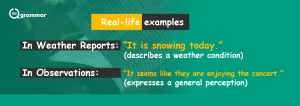
- In Weather Reports: “It is snowing today.” (describes a weather condition)
- In Observations: “It seems like they are enjoying the concert.” (expresses a general perception)
- In Statements of Existence: “There are many options available.” (indicates options without a specific subject)
Impersonal Verbs vs. Personal Verbs

The main distinction between impersonal and personal verbs is in their subject. Personal verbs have a clear subject performing the action, such as “She runs every morning.” In contrast, impersonal verbs do not attribute the action to a specific doer, as seen in “It rains in April.”
By understanding and using impersonal verbs, you can express ideas more broadly and inclusively, making your writing and speaking richer and more relatable.


